ESRS E5 Waste Disclosures After the Omnibus: The Data EHS Teams Actually Need
TL;DR: Since Omnibus I (Directive (EU) 2026/470, in force 18 March 2026), the CSRD applies to companies with more than 1,000 employees and more than €450 million turnover. The revised ESRS apply from financial years starting on or after 1 January 2027 with far fewer datapoints. If circular economy is material, waste outflows by treatment route remain the most data-intensive part of E5.
What changed in 2026
- Scope: both thresholds must be met cumulatively; non-EU groups are in scope above €450 million EU turnover with an EU subsidiary or branch above €200 million (Council of the EU).
- Revised ESRS: adopted by the Commission on 3 July 2026 and published in the Official Journal on 21 September 2026 (Delegated Regulation (EU) 2026/1563); they cut mandatory datapoints by more than 60% (CSR Tools, Corefiling).
- Timing: companies newly in scope report in 2028 on financial year 2027.
- E5: datapoints cut by around 60%, the standalone financial-effects disclosure (E5-6) deleted and a critical raw materials metric added (Coolset). E5 applies where circular economy is material in your double materiality assessment.
- Value chain cap: CSRD reporters cannot require suppliers with up to 1,000 employees to provide more than the voluntary standard (VS) sets out.
Why waste outflows are where projects stall
Policies, actions and targets are narrative. Resource outflows are quantitative: tonnes by type, hazardous versus non-hazardous, and by treatment route, recycled, incinerated or landfilled (Socious). That data lives in registers, tracking slips, invoices and hauler reports, rarely in one place.
The data map for EHS teams
- France: the waste register and Trackdéchets slips give hazardous flows and treatment codes (see our national waste registry guide).
- All sites: hauler invoices and annual recovery certificates give non-hazardous tonnages and routes.
- Group: one stream list, one unit (tonnes), one treatment code per line, one owner per site.
[[button-1]]
A 5-step plan before FY2027 starts
- Confirm scope at group level against both thresholds.
- Check whether circular economy is material in your double materiality assessment.
- Inventory waste data sources per site and fill gaps (estimated weights, missing routes).
- Align stream names and treatment codes across countries.
- Use the same dataset for Scope 3 Category 5 to avoid two versions of the truth (see our Category 5 guide).
Where Wastetide fits
Wastetide turns registers, invoices and contracts into one clean dataset by site, stream and treatment route (automated, compliant data) and highlights streams that could move up the hierarchy (material identification).
[[button-2]]
FAQ
Who must report under the CSRD after the Omnibus?
EU companies with more than 1,000 employees and more than €450 million net turnover, plus certain non-EU groups above €450 million EU turnover.
When do the revised ESRS apply?
To financial years beginning on or after 1 January 2027.
Is ESRS E5 mandatory?
Only where resource use and circular economy are material in your double materiality assessment.
Can a large customer demand full waste data from my SME site?
Not for CSRD purposes beyond the voluntary standard if you have up to 1,000 employees; other legal purposes are not covered by the cap.
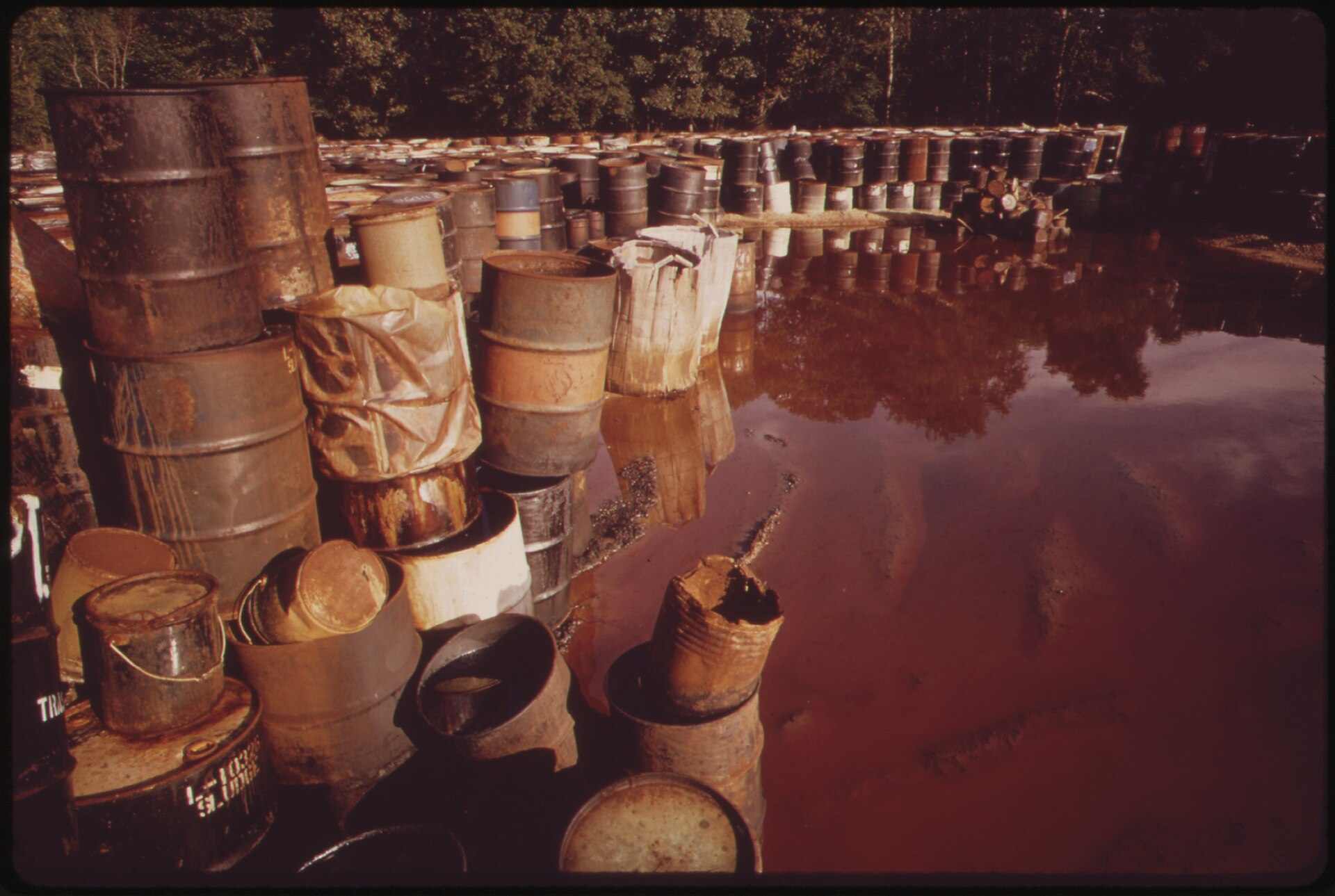
Sources: Council of the EU (24 Feb. 2026); Directive (EU) 2026/470; Delegated Regulation (EU) 2026/1563 as reported by CSR Tools, Corefiling, Projet Celsius; Coolset; Socious; Ekobon. Check national transposition. Image: EPA DOCUMERICA, U.S. National Archives, public domain. Informational, not legal advice.
You may like
Turn waste into opportunity.
Hack the flow.
Join Wastetide.
At Wastetide, we turn discarded materials into new possibilities.
We combine responsible sourcing and bold design to transform waste into meaningful, sustainable value.
